
 Search
 Pioneer of Tibet Tourism for Overseas Travelers since 1984!

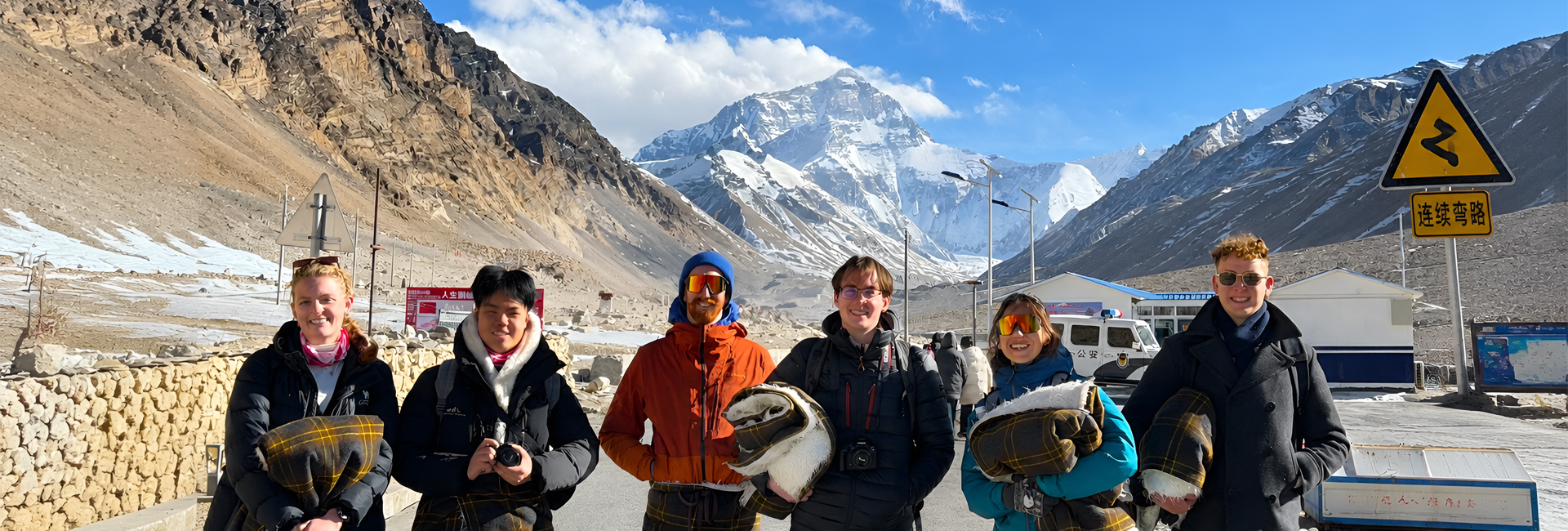
As you travel through Tibet, you will often see strings of colorful prayer flags fluttering in the wind. They appear on mountain passes, near monasteries, around sacred lakes, and along pilgrimage routes, adding bright colors to the high-altitude landscape.
Tibetan prayer flags are more than colorful decorations. Printed with Buddhist mantras and sacred symbols, they are traditionally hung where the wind can carry their prayers and blessings. For Tibetans, hanging prayer flags is a way to pray for peace, compassion, wisdom, good fortune, and the well-being of all living beings.
What Are Tibetan Prayer Flags?
Tibetan prayer flags are pieces of colored cloth printed with Buddhist prayers, mantras, and sacred images. They traditionally come in five colors: blue, white, red, green, and yellow. You can often see them fluttering in the wind across Tibet.
Prayer flags have been used in Tibet for a long time. The early history of Tibetan prayer flag is linked to Bon, the ancient religious tradition of Tibet. As Buddhism spread in Tibet, Buddhist prayers and symbols gradually became part of the flags. Today, prayer flags commonly feature Buddhist mantras, sacred images, and symbols of good fortune.

Tibetan prayer flags traditionally use five colors: blue, white, red, green, and yellow.
Why Do Tibetans Hang Prayer Flags?
Tibetan people hang prayer flags to express prayers and good wishes for peace, good fortune, compassion, wisdom, and well-being. Traditionally, it is believed that as the wind blows through the flags, the prayers and blessings spread to the surrounding communities and all living beings.
Prayer flags may also be hung to pray for family members, bring blessings to a home or community, or mark important occasions. The blessings are not only meant for the person hanging the flags, but are also intended to benefit others.
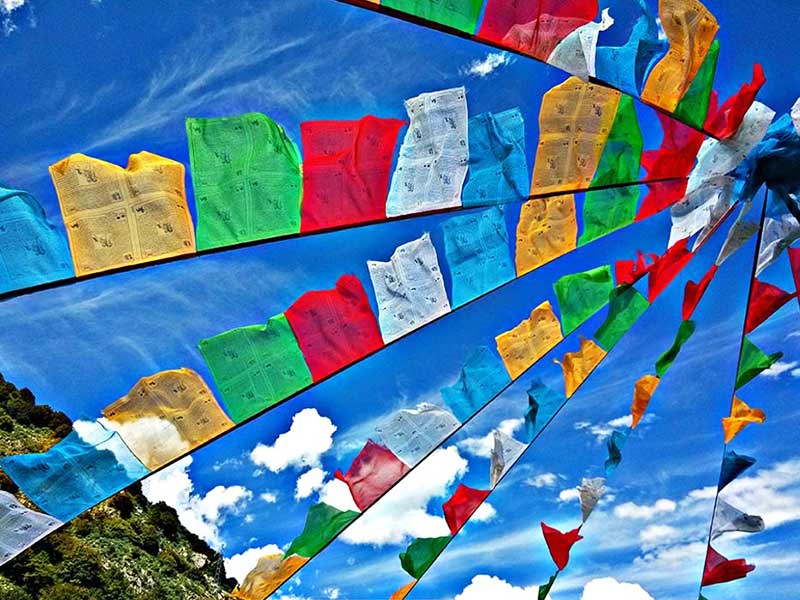
Colorful prayer flags carry prayers and blessings in the wind.
What Do the Five Colors of Tibetan Prayer Flags Represent?
A traditional set of Tibetan prayer flags includes five colors arranged in a specific order: blue, white, red, green, and yellow. Each color represents an element of nature, and together they are known as the Five Pure Lights.
| Color | Element | Meaning |
|---|---|---|
| Blue | Sky and space | Openness, vastness, and wisdom |
| White | Air and wind | Purity and the movement that carries prayers |
| Red | Fire | Energy, vitality, and strength |
| Green | Water | Balance, harmony, and the flowing nature of life |
| Yellow | Earth | Stability, grounding, and a solid foundation |
Blue: Sky and Space
Blue represents the sky or space. It is associated with openness, vastness, and wisdom. On a string of prayer flags, blue is traditionally placed first.
White: Air and Wind
White represents air and wind. It is associated with purity and the movement that carries the prayers of the flags.
Red: Fire
Red represents fire and is associated with energy, vitality, and the power to overcome obstacles.
Green: Water
Green represents water. It is associated with balance, harmony, and the flowing nature of life.
Yellow: Earth
Yellow represents earth. It symbolizes stability, grounding, and the solid foundation needed for life and spiritual development.
The five colors also have deeper meanings in Tibetan Buddhism and are associated with different aspects of Buddhist teachings. When prayer flags are hung together, the traditional color order is usually maintained.
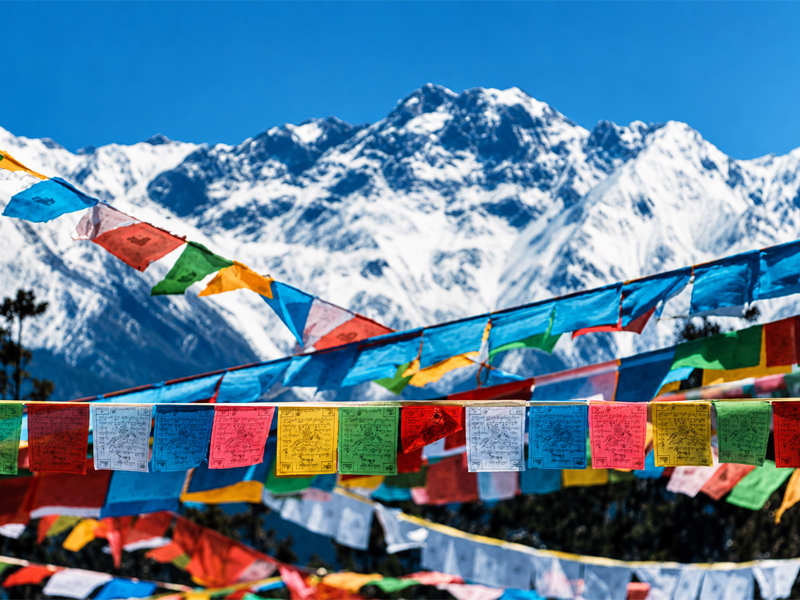
The five colors of Tibetan prayer flags follow a traditional order rather than being arranged randomly.
What Are the Mantras and Symbols on Tibetan Prayer Flags?
Tibetan prayer flags are printed with Buddhist prayers, mantras, and sacred symbols. Designs vary, but many traditional prayer flags feature a Wind Horse, or Lung Ta, in the center.
The Wind Horse is often shown carrying the Three Jewels, which represent the Buddha, Dharma (Buddha’s teachings), and Sangha (the Buddhist community). The Wind Horse itself is associated with positive energy and good fortune, carrying prayers and good wishes with the wind.
The corners of some traditional prayer flags feature the Four Dignities: the dragon, Garuda, snow lion, and tiger. Other flags may include the Eight Auspicious Symbols, such as the lotus, endless knot, Dharma wheel, and victory banner.
Mantras are another important part of prayer flags. One of the most common is Om Mani Padme Hum, the six-syllable mantra associated with Avalokiteshvara, the Bodhisattva of Compassion.
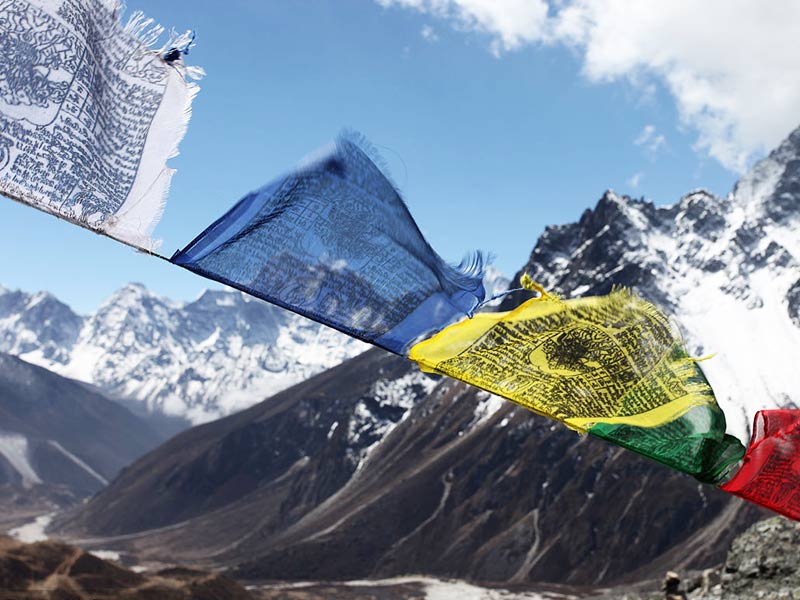
Prayer flags with Buddhist mantras and sacred symbols flutter in the wind.
What Are the Two Types of Tibetan Prayer Flags?
There are two main types of Tibetan prayer flags: Lung Ta and Darchog. Lung Ta are hung horizontally, while Darchog are displayed vertically on poles.
Lung Ta: Horizontal Prayer Flags
Lung Ta are the most common type of prayer flags seen across Tibet. They are usually small square or rectangular pieces of cloth connected along their upper edges to form a long string.
The name Lung Ta means “Wind Horse,” referring to the Wind Horse symbol traditionally printed on many of these flags. Lung Ta are stretched horizontally between two points, such as poles, rocks, buildings, monasteries, or stupas, so they can move freely in the wind.
Darchog: Vertical Prayer Flags
Darchog are vertical prayer flags attached to poles. They are generally larger and longer than individual Lung Ta flags and stand upright rather than being stretched horizontally between two points.
A Darchog is usually attached along one edge to a pole, allowing the flag to flutter vertically in the wind.
The easiest way to tell the two apart is by how they are displayed: Lung Ta are strings of horizontal flags, while Darchog are vertical flags on poles.
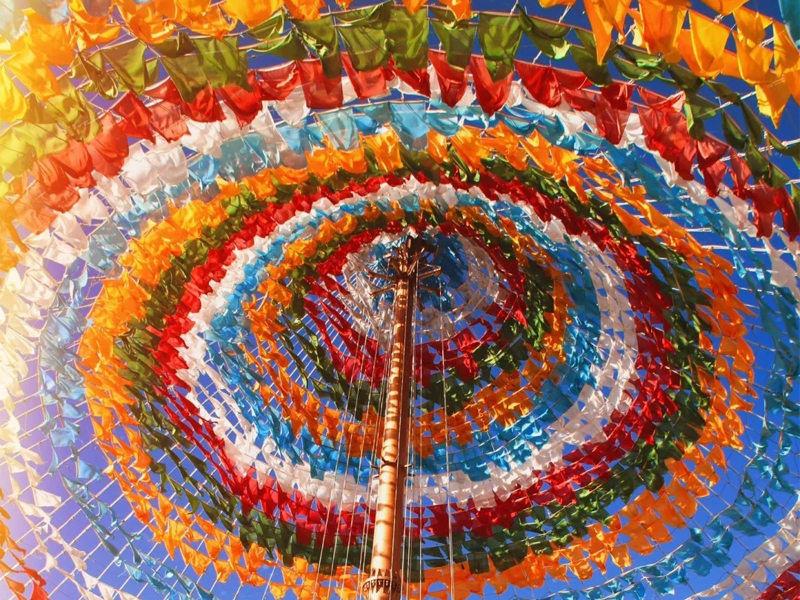
Darchog hang vertically on poles, unlike horizontal Lung Ta prayer flags.
Where Do Tibetans Hang Prayer Flags?
Tibetans traditionally hang prayer flags in open, elevated, and sacred places, especially where the flags can catch the wind. Mountain passes, monasteries, stupas, sacred mountains, lakes, and pilgrimage routes are some of the most common places.
Mountain Passes and High Places
Mountain passes and hilltops are common places for Tibetans to hang prayer flags. These open, elevated locations receive plenty of wind, allowing the flags to flutter freely.
Large collections of prayer flags can be found at many mountain passes across Tibet. Simila Pass and Gawula Pass on the route toward Mount Everest are good examples, where colorful flags are stretched between poles and rocks.
Monasteries and Buddhist Sites
Prayer flags are also commonly hung around monasteries, temples, stupas, and other Buddhist sites. These are places of prayer and worship, so hanging prayer flags naturally forms part of the religious setting.
Lung Ta may be stretched between buildings or around stupas, while vertical Darchog can be placed on poles. Prayer flags are often seen alongside prayer wheels and other sacred objects.
Sacred Mountains, Lakes, and Pilgrimage Sites
Tibetans also hang prayer flags around sacred mountains, lakes, and pilgrimage sites. They can be found along pilgrimage routes, beside sacred lakes, and at places where pilgrims stop to pray.
Around Mount Kailash, prayer flags can be seen at many points along the kora route. Drölma-la Pass, the highest point of the 3-day Kailash kora, is one of the most noticeable places, with large numbers of prayer flags gathered around the pass.
Prayer flags are also commonly seen around sacred lakes such as Namtso, particularly near monasteries, prayer sites, and other places of religious importance.
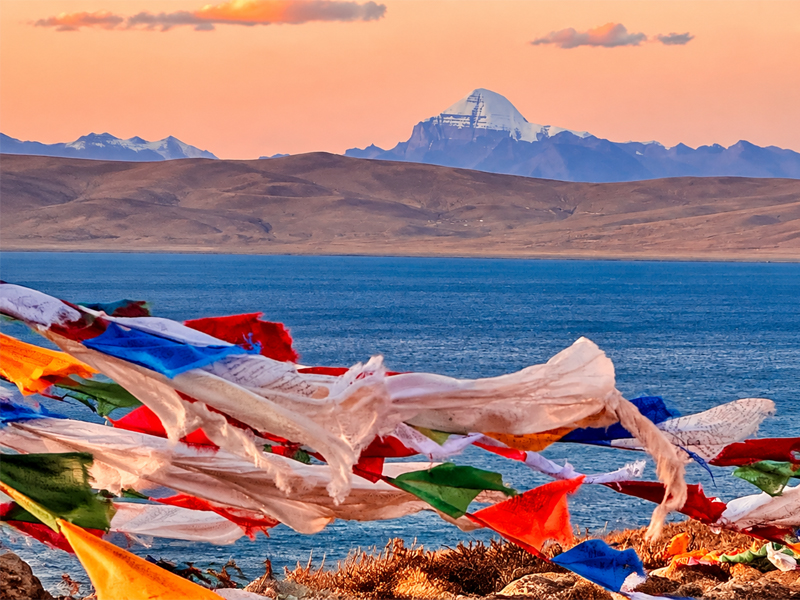
Prayer flags are commonly hung around sacred Mount Kailash and along its pilgrimage areas.
How to Hang Tibetan Prayer Flags Properly and What to Avoid
Prayer flags should always be treated with respect. They are traditionally hung in clean, elevated places where they can catch the wind and should be kept off the ground.
When hanging a traditional set of prayer flags, keep the five colors together and in their traditional order. The complete set represents the five elements, so the individual colors should not be separated simply for decoration.
There are also a few important things to avoid:
- Do not let prayer flags touch the ground or step on them.
- Do not throw old prayer flags in the trash. Traditionally, old prayer flags are burned respectfully rather than discarded with ordinary waste.
- Do not move, remove, or disturb existing prayer flags simply to take a better photo.
- Do not climb onto stupas, religious structures, or sacred places to hang prayer flags or take photographs.
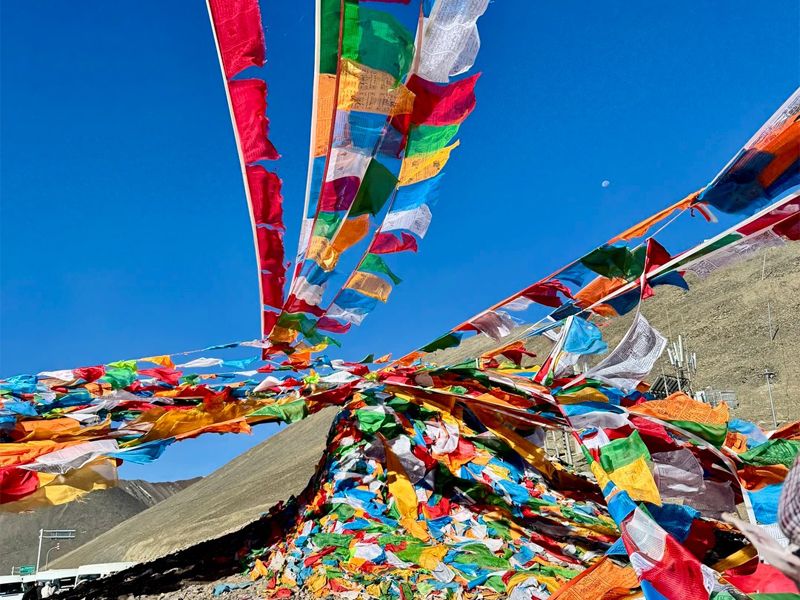
Tibetans often hang prayer flags high on mountain passes, where they can flutter freely in the wind.
When to Hang and Take Down Prayer Flags
Tibetans hang hang new prayer flags throughout the year, but auspicious days, festivals, and important religious occasions are especially common times to put them up.
Mornings are usually preferred, and windy days are also considered suitable because the flags can begin fluttering freely in the wind.
Losar, the Tibetan New Year, is an especially important time for renewing prayer flags. Old and faded flags may be respectfully removed and replaced with new ones to welcome the new year and offer prayers for peace, good fortune, and well-being. Certain dates in the Tibetan lunar calendar are also traditionally considered auspicious for putting up new prayer flags.
Another important occasion is the Saga Dawa Festival, usually held in May or June. Around Mount Kailash, Tibetan pilgrims gather at Tarboche, where a giant prayer pole decorated with colorful prayer flags is raised during the festival. Old prayer flags are replaced with new ones as part of the religious celebrations, and many pilgrims then continue their kora around Mount Kailash.
Prayer flags are not normally taken down simply because their colors begin to fade. Sun, wind, rain, and snow naturally wear them over time. They are generally left in place until they become old or damaged and need to be replaced.
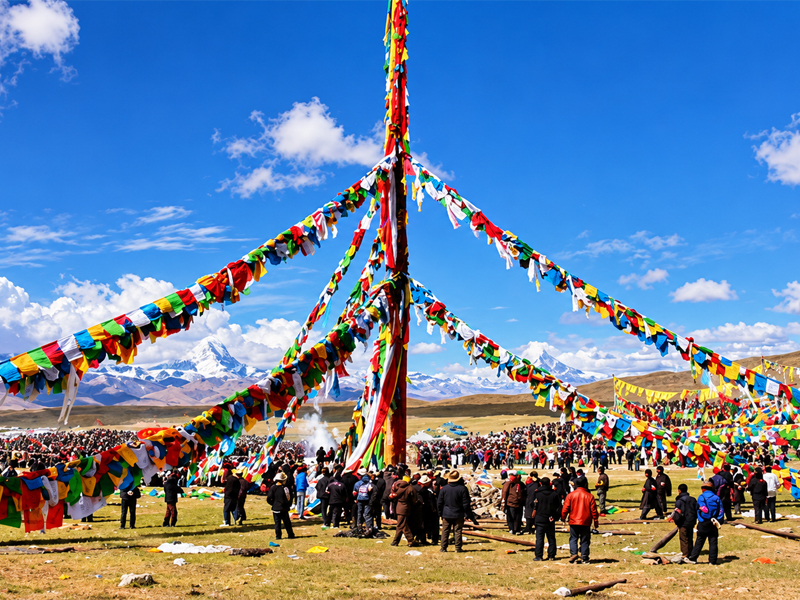
A giant prayer pole is raised at Tarboche near Mount Kailash during Saga Dawa.
Can Travelers Hang Prayer Flags During a Tibet Trip?
Yes, you can hang prayer flags during a Tibet trip, as long as they do so respectfully and in an appropriate place. Mountain passes and other suitable locations along the journey often provide opportunities to take part in this Tibetan tradition.
For example, on the journey from Lhasa to Mount Everest, you may have the opportunity to hang prayer flags at mountain passes such as Simila Pass or Gawula Pass. Those traveling around Mount Kailash may also encounter appropriate places for prayer flags along the pilgrimage route.
Prayer flags can be purchased in Lhasa, or your local Tibetan guide can help prepare them and show you where and how to hang them properly. If you would like to hang prayer flags during your trip, it is best to ask your guide first rather than choosing a place yourself.
When taking part, follow the same local customs mentioned above: keep the flags off the ground, respect the traditional five-color order, and do not move or remove existing prayer flags to make space for your own.
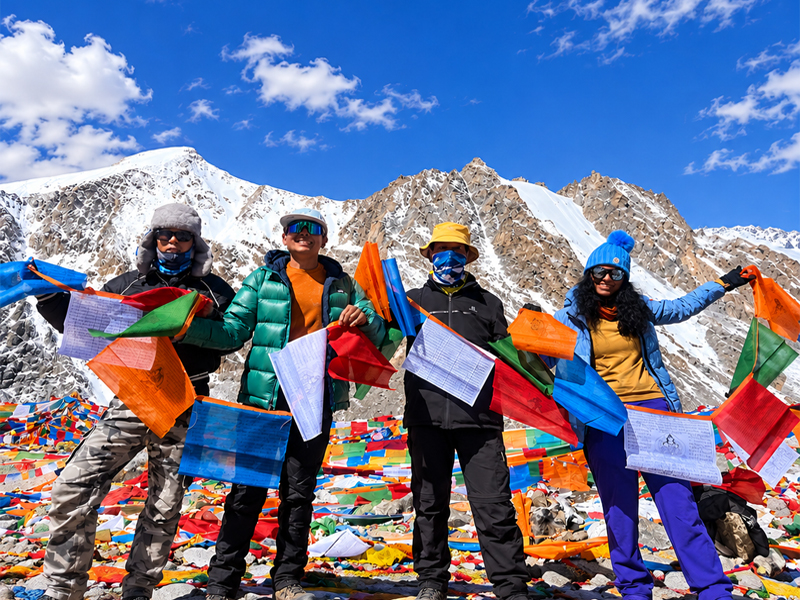
Travelers hang prayer flags during the Mount Kailash Kora.
Conclusion
Tibetan prayer flags are one of the most familiar sights in Tibet. But behind their bright colors are prayers, blessings, and traditions that have been passed down for generations.
During your Tibet trip, you will see prayer flags on mountain passes, around monasteries, and near sacred mountains and lakes. Next time you see them fluttering in the wind, you will know a little more about what they mean and why they are so important to Tibetan people.
If you get the chance to hang prayer flags yourself, follow local customs and enjoy the experience. It is a simple but meaningful way to take part in a Tibetan tradition and leave your own good wishes along the journey.

"Tibetan Prayer Flags: Why Do Tibetans Hang Them? What Do They Mean?"